Business
NC Senate Passes THC Crackdown — What It Means for Winston-Salem Hemp Businesses and Consumers
By Staff · July 18, 2026
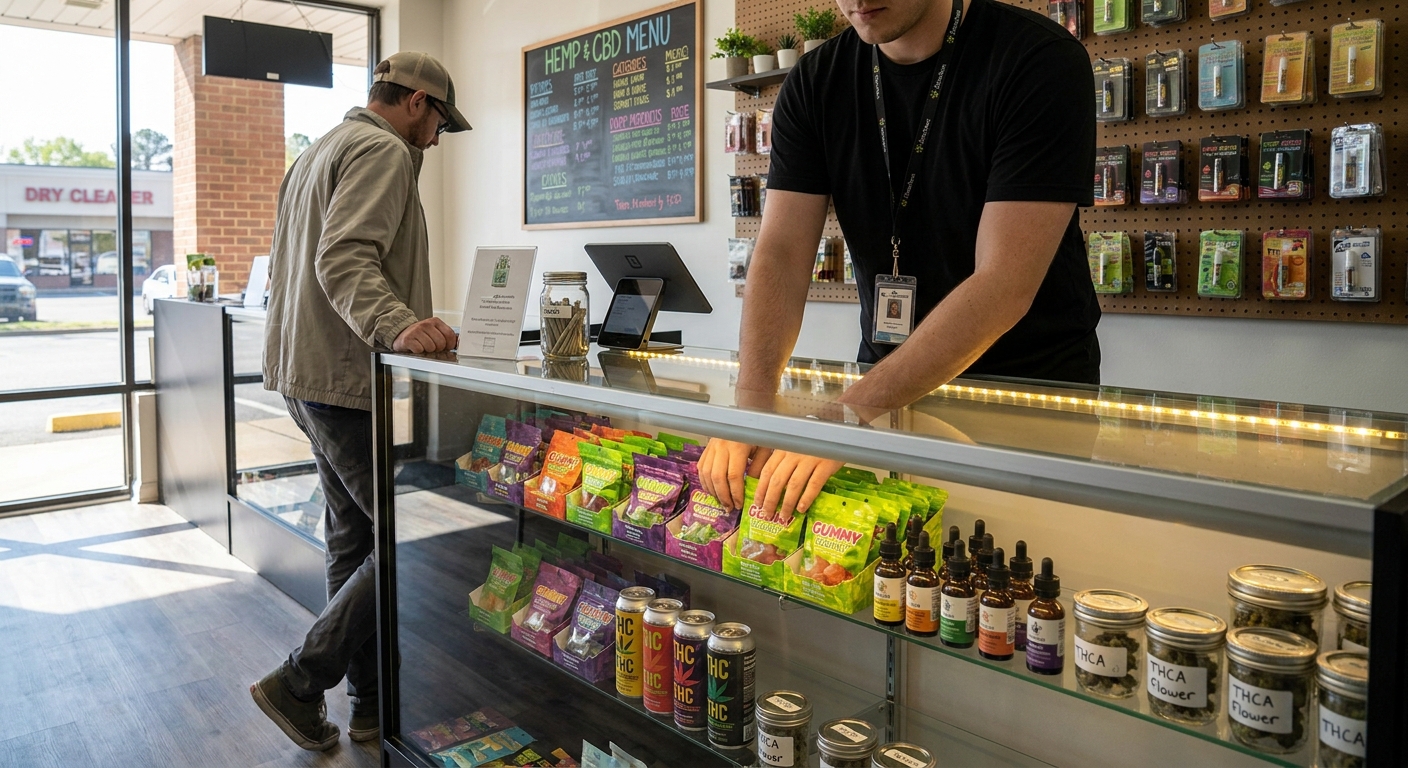
At Winston-Salem hemp counters, the stakes are sitting on the shelves: THC drinks, gummies, vapes, delta-8 products and THCA flower that could be pushed out of the legal market under a Senate-approved overhaul. The House left Raleigh without a final vote, leaving retailers and customers to wait through the summer to learn whether a new 21-and-over rule and strict THC cap will reshape what can be sold locally.
The Senate approved House Bill 328 on July 2, 37–6, banning the sale of intoxicating hemp-derived products to people under 21 and establishing a new regulatory framework. The House adjourned without acting, postponing a decision that could dramatically change what local hemp shops may stock — and who can buy it.
Lawmakers are scheduled to return Monday, July 27, at noon. House leaders must decide whether to approve or reject the unamendable conference report on HB 328. For Winston-Salem businesses, the break is less a reprieve than a chance to weigh whether their current shelves, suppliers and sales models could withstand the proposal.
What the Bill Would Prohibit and Regulate
The bill sets a 0.4-milligram total-THC limit per container for finished hemp-derived consumables — a threshold that would effectively remove most THC beverages, gummies, vapes, delta-8 products and THCA flower from the legal market. That limit would take effect Nov. 12, 2026, aligning state law with upcoming federal total-THC standards.
HB 328 would rewrite the state's definition of hemp. North Carolina now relies on a 0.3% delta-9 THC standard by dry weight. The proposed law would shift to a total-THC standard that includes delta-9 THC plus 87.7% of THCa plus other THC forms.
The legislation names July 15, 2026, as the effective date for the age restriction, though that day will pass before the House is set to vote the week of July 27. If the House passes the bill after July 15, the age-21 rule would likely become effective upon the governor's signature or on a date specified in the final enacted text.
The bill would require licensing, lab testing and child-resistant packaging for hemp businesses, with the Alcohol Law Enforcement Division overseeing the industry. Retailers would have to verify age if they have reasonable grounds to believe a purchaser is under 21, and online sellers must use age-verification delivery methods requiring a signature from someone 21 and older.
Penalties would include a Class 2 misdemeanor for underage sales or possession and a Class A1 misdemeanor for possessing prohibited cannabinoids such as THCa and delta-8. The bill would prohibit hemp-derived consumables on educational property regardless of age. It also would ban synthetic kratom, restrict sales of natural kratom to people 21 and older, and regulate the drug xylazine.
Economic Threat: Statewide Industry Predicts Closures
Allen Hardison, co-owner of a Greenville hemp store, estimates that HB 328 would eliminate 90–95% of his shop's sales by changing the THC testing standard and tightening age limits. Hardison said the bill is "definitely an industry killer" and would likely force his business to close.
Franny Tacy, CEO of Franny's Farmacy, called the 0.4 mg total-THC cap per package "ludicrous" and amounting to "prohibition by dosage," saying it would put hemp-specific retailers out of business and leave farmers with products they cannot sell.
Jeremy Ridgeway, owner of Asheville Vapor, said the bill "pretty much eliminates the industry completely." Jack Sherrie, CEO of Delta Beverages, said the bill would ultimately shut his company down and prevent it from selling products.
Small hemp business owners support more oversight but fear HB 328 goes too far, expressing concern that its 0.4 mg total-THC limit would effectively ban most hemp-derived products, including full-spectrum CBD and Delta-9 products.
Winston-Salem shops face the same stakes: the statewide rules would apply just as fully locally, imposing the same product limits, age checks and compliance costs. For customers under 21, the change would cut off legal access to intoxicating hemp-derived products. For retailers whose revenue depends on products the bill would prohibit, the question is whether licenses and compliance rules could sustain a business — or simply regulate its decline.
What Happens Next: House Returns July 27
House Speaker Destin Hall stated that the updated conference report emerged late on Wednesday, leaving lawmakers insufficient time to review the complex technical language before the House adjourned for break. The House Republican caucus generally agreed they needed about a month to study the bill's technical aspects before voting. Hall said the caucus wanted to "err on the side of caution." Destin Hall, NC House Speaker, said, "If the caucus wants to proceed with the bill, it'll get a vote."
Winston-Salem and Forsyth County are represented in the North Carolina House by five legislators across five districts: District 71 (Kanika Brown, Democrat), District 72 (Amber Baker, Democrat), District 74 (Jeff Zenger, Republican), District 75 (Donny Lambeth, Republican), and District 91 (Kyle Hall, Republican). Lambeth is listed as a sponsor of HB 328. Baker and Brown voted YES on an earlier House roll call for HB 328. Kyle Hall, NC House Representative, said, "I personally support making sure that we're cracking down on these substances."
The Senate expressed frustration that the House had not yet taken up the measure. Phil Berger, NC Senate President Pro Tem, said that "doing nothing was not an option" and that the Senate "could not and should not delay any further." Berger cited a pressing crisis caused by intoxicating hemp products flooding North Carolina and causing personal loss across the state.
The bill had previously died in April 2026 when the House voted 95–18 not to concur with the Senate's version, but was revived through a conference committee. The next confirmed North Carolina legislative session date after July 27 is not until Monday, August 31, 2026.