Government
Forsyth County Commissioners Approve $600 Million Budget: What It Means for Schools and Community Services
By Staff · July 18, 2026
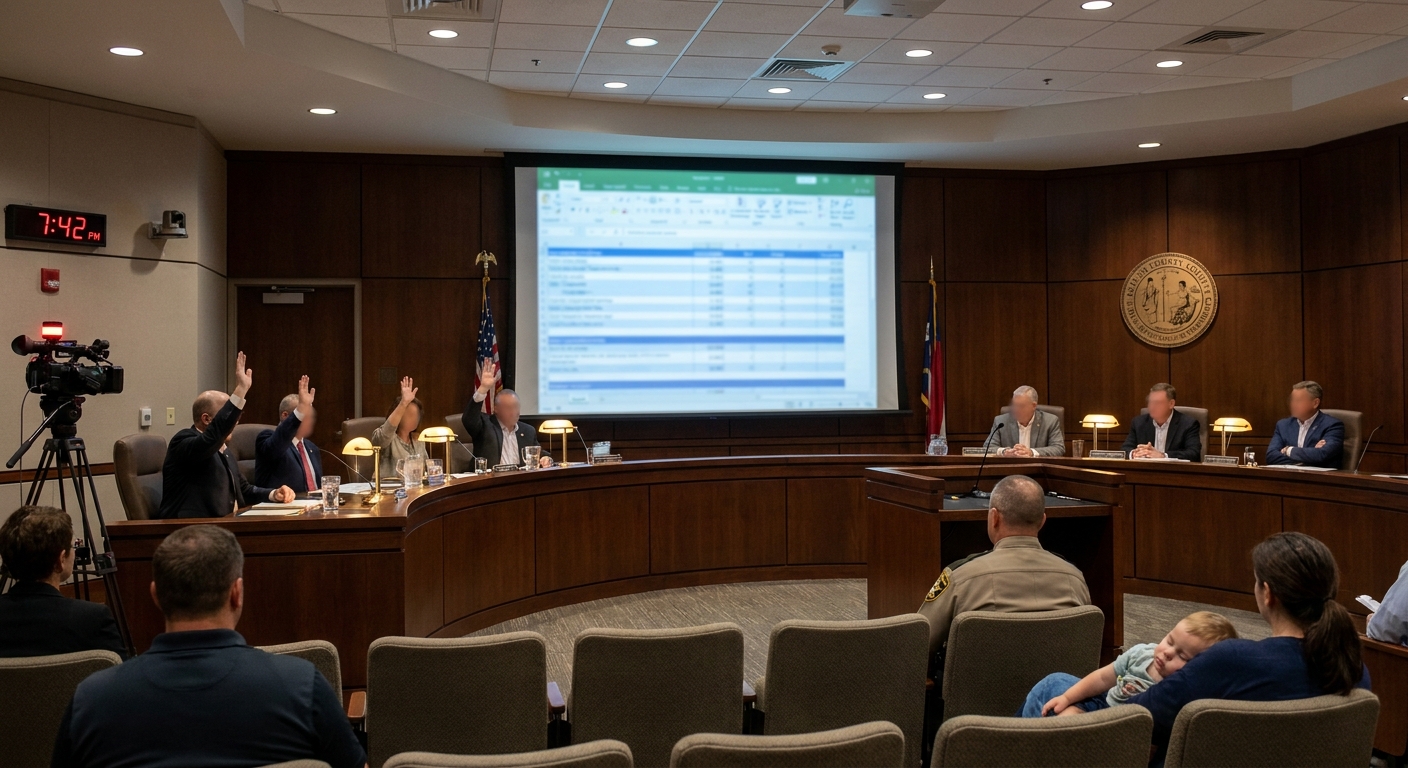
Forsyth County's new $600.7 million budget asks property owners to pay more while keeping most county services in place, giving schools a limited increase and leaving major requests from schools and public safety unanswered. Commissioners approved the fiscal year 2026-27 spending plan June 4 in a 4-3 vote that reflected deep divisions over funding priorities. It takes effect July 1.
County officials said the adopted budget maintains existing county services, increases funding for Winston-Salem/Forsyth County Schools, and continues support for community agencies while strengthening the county's fiscal health.
The budget debate unfolds as Board of Commissioners Chair Don Martin prepares to retire July 31, 2026, after nearly 12 years shaping county fiscal priorities. Martin will turn 75 in August 2026, and his upcoming birthday is part of his reasoning for stepping down.
Education remains the county's largest expense, at $193.5 million, or 32% of the total budget. Winston-Salem/Forsyth County Schools will receive $179 million in county funding, or 92.5% of all education spending. The increase is $1.35 million — a 1% rise tied to a formula pegged to property tax growth — which restores components of the school district's exceptional children program.
The funding falls far short of what the district requested. Winston-Salem/Forsyth County Schools asked for $33.5 million in additional county funding — bringing its total budget request to $213.3 million — to restore faculty positions cut during a prior $45 million budget crisis, expand staffing, adjust course offerings, fund educator pay raises, and restore teaching positions for Exceptional Children and grades 6-12 teachers. Funding that full request would have required a 5.1-cent property tax increase, which county officials said would risk the county's triple-A bond rating by requiring a draw from the fund balance.
Under North Carolina's new budget framework, beginning teacher salaries will rise about 17%, creating challenges for the district because many newer educators are paid with local dollars rather than state funds. Don Phipps, superintendent of Winston-Salem/Forsyth County Schools, said the district "will need $4–6 million for raises, up from the $1.6 million currently allocated."
In June 2025, commissioners voted 6-1 to reject a one-time payment of $32.1 million requested by the school system to address a budget shortfall, citing concerns about protecting the fund balance and triple-A bond rating. Commissioner Malishai Woodbury was the only member to support the request.
The budget keeps a broad network of health, social service, and cultural programs in place. Health and Human Services, which includes social services, SNAP, and special assistance programs, received $101.1 million, or 16% of the total budget. Culture and Recreation received $20.3 million, or 3%.
Community Grants received $1.77 million, funding local nonprofits including Senior Services, Experiment in Self-Reliance, Children's Law Center, LEAD Girls of North Carolina, Legal Aid, The Dwelling, Bethesda Center for the Homeless, Horizons Residential Care Center, Crosby Scholars, the Arts Council, and Old Salem. In fiscal year 2025-2026, Senior Services, Inc. received $363,000, the largest single award in that cycle, and Experiment in Self-Reliance received $50,000 for its Individual Development Account program.
Sheriff Bobby Kimbrough criticized the county manager's proposed budget, arguing that it did not fully fund his office's requests for staffing, inmate medical care, overtime, and vehicle replacement. The Sheriff's Office received approximately $76.5 million, but much of Kimbrough's more than $8 million in enhancement requests and 35 new positions went unfunded. The office is expected to exceed its current-year budget by more than $1 million, with about $800,000 of the deficit tied to inmate health care and overtime costs.
Public Safety overall, including the Sheriff's Office and emergency services, received $115.7 million, or 19% of the total budget.
County Manager Shontell Robinson presented the recommended budget — initially $599 million in May before commissioners adopted the final $600.7 million plan in June — emphasizing maintained high-quality services, strengthened investment in education, and long-term sustainability despite revenue growth projected at only 1%. The county held a public hearing on the budget on May 19, 2026, before adopting the final budget on June 4, meeting the June 30 statutory deadline.
Residents will pay more for that balance. The budget sets the property tax rate at 55.40 cents per $100 of assessed value, an increase of 1.88 cents from the prior year. For a median-valued home of $269,700, that adds approximately $50.70 per year in county property taxes, or roughly $4.23 per month.
Debt service received $84.9 million, or 14% of the total budget. Administration and Support received $46 million, or 8%.
The vote comes as Martin prepares to close a fiscal legacy built over nearly 12 years. Before becoming a commissioner, he served as Winston-Salem/Forsyth County Schools superintendent for 19 years. During his tenure on the board, voters approved the 2016 school bond and a quarter-cent sales tax in 2020 to boost teacher pay, and the county now guarantees school base allocations increase with property tax revenue growth.
Major infrastructure projects completed under Martin's leadership include a new courthouse, Kaleideum Science Museum, three new libraries, a new Agricultural Center, and park additions like Dudley Watts Park. His retirement marks the end of a decade of more than $1 billion in capital investment and nearly 2,200 new jobs in the region.
Martin's primary fiscal priority was maintaining no increase in property tax rates despite inflation and rising costs, though the 2026-27 budget did include the 1.88-cent rate increase. Don Martin, chair of the Forsyth County Board of Commissioners, said commissioners should "never compromise the safety of this community... over dollars and cents."
The Forsyth County Board of Commissioners consists of seven elected officials: Don Martin (District B, chairman), Gloria D. Whisenhunt (District B, vice chairwoman), Richard V. Linville (District B), Tonya D. McDaniel (District A), Dan Besse (at-large), Malishai Woodbury (District A), and G. Gray Wilson (District B). Martin's retirement will require the board to appoint or elect a replacement for his District B seat, and the 4-3 budget vote signals that future spending priorities may shift depending on the new board's composition.
Winston-Salem/Forsyth County Schools Board of Education unanimously approved more than $3.8 million in budget amendments and transfers during a special-called meeting, using additional state and local revenue to close the books on fiscal year 2026 and address remaining debt.
As Martin departs and commissioners prepare to fill his seat, future budget debates will return to the tension between protecting reserves and meeting requests from schools, law enforcement, and residents who depend on county services.