Local News
Ride-Share Desert: King Residents Report Uber and Lyft Unavailability, Highlighting Rural Transit Gaps
By Staff · July 19, 2026
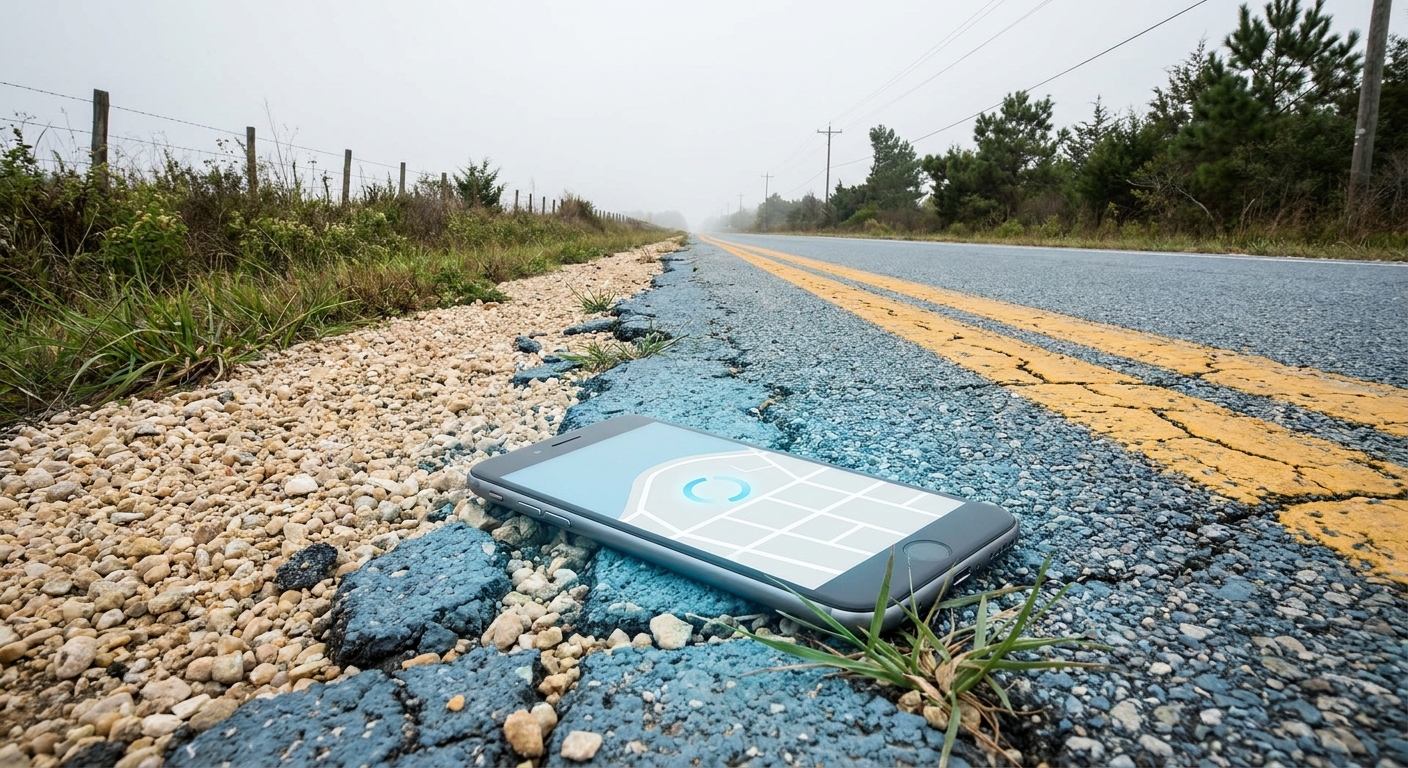
After hours of trying to get from King to Winston-Salem to retrieve a car, a resident was left staring at two dead ends: Lyft said it did not serve King, and Uber repeatedly displayed a "Try Again later" error. In a post on the Unofficial City of King Page on Facebook, the resident asked whether Uber had stopped picking up riders in town, drawing 21 replies.
King spans Stokes and Forsyth counties and sits about 15 to 16 miles northwest of Winston-Salem. The town's estimated population was 7,391 as of July 1, 2025.
For people in King, that is more than an app problem. It is a question of whether they can get to work, reach a medical appointment, recover a disabled vehicle or handle any other essential trip when their own car is unavailable.
Uber lists King in its official North Carolina coverage area, but a trip still requires a nearby driver to be logged in and willing to accept it. In rural areas, if no drivers are active nearby, riders simply cannot get a ride. Uber says availability varies by location and waits can grow where fewer drivers are on the road. Driver shortages in rural and transportation-desert areas have continued in 2026, leaving some riders unable to get a trip or waiting more than 10 minutes. Low population density can make the service hard to sustain because demand may not produce enough earnings for drivers, even with recruitment bonuses and guaranteed minimum pay. Lyft has acknowledged that driver availability in remote locations can be inconsistent and may require additional payments to bring drivers there, creating losses in rural markets. Limited internet or cellular service can create another obstacle to requesting an app-based ride, even in places a company says it covers.
Winston-Salem is a major employment hub for the Piedmont Triad, with its daytime population rising by 30,511 people, or 12.1%, as commuters arrive from surrounding communities, including King. In the Winston-Salem area, 85.9% of workers commute by car, compared with 1.5% who use public transit. The average commute is 21.5 minutes. When a vehicle breaks down, King residents who depend on Winston-Salem for work or medical care have no backup transportation to bridge the gap.
The economic dynamics that make rural service unprofitable affect any low-density area where driver numbers cannot be sustained, raising the question of how many other bedroom communities around Winston-Salem face the same transportation gap.
Public transportation does not fill it. The Winston-Salem Transit Authority does not operate buses to King because its jurisdiction ends at city limits. The Piedmont Authority for Regional Transportation has no fixed-route bus line serving the town. Stokes County Transit has no operating service with routes or schedules serving King; a proposed fixed deviated route connecting King, Hanging Rock State Park, Danbury and Walnut Cove remains in the planning stage.
King Taxi is listed in the Better Business Bureau directory as a taxi service at 410 Turkeyhill Drive in King, with the phone number 336-985-3095. Stokes County does not have a large network of dedicated taxi providers; most are concentrated in nearby Winston-Salem or Mount Airy.
ForsythRides is Forsyth County's no-cost employment transportation service that provides private rides for work, job interviews, skills training, GED classes and childcare for working parents, covering up to 35 miles from a resident's home and requiring that rides originate in Forsyth County. Residents living in the Forsyth County portion of King may be eligible. ForsythRides operates under a cohort-based model that began July 1, 2024, in which participants receive rides for up to three months at a time, with limited space and applicants potentially placed on a waitlist.
For working families in outer communities who cannot afford a second vehicle or emergency transportation costs, the gap between promised ride-share coverage and actual availability becomes an economic-stability threat — one that affects their ability to hold jobs, attend medical appointments and manage daily logistics. The question facing King and similar bedroom communities is what happens when private companies decide a town isn't worth serving and public transit alternatives remain in the planning phase or unavailable entirely.