Local News
Wake Forest Scholars Weigh In on Landmark Federal Housing Bill — What the ROAD to Housing Act Could Mean Locally
By Staff · July 18, 2026
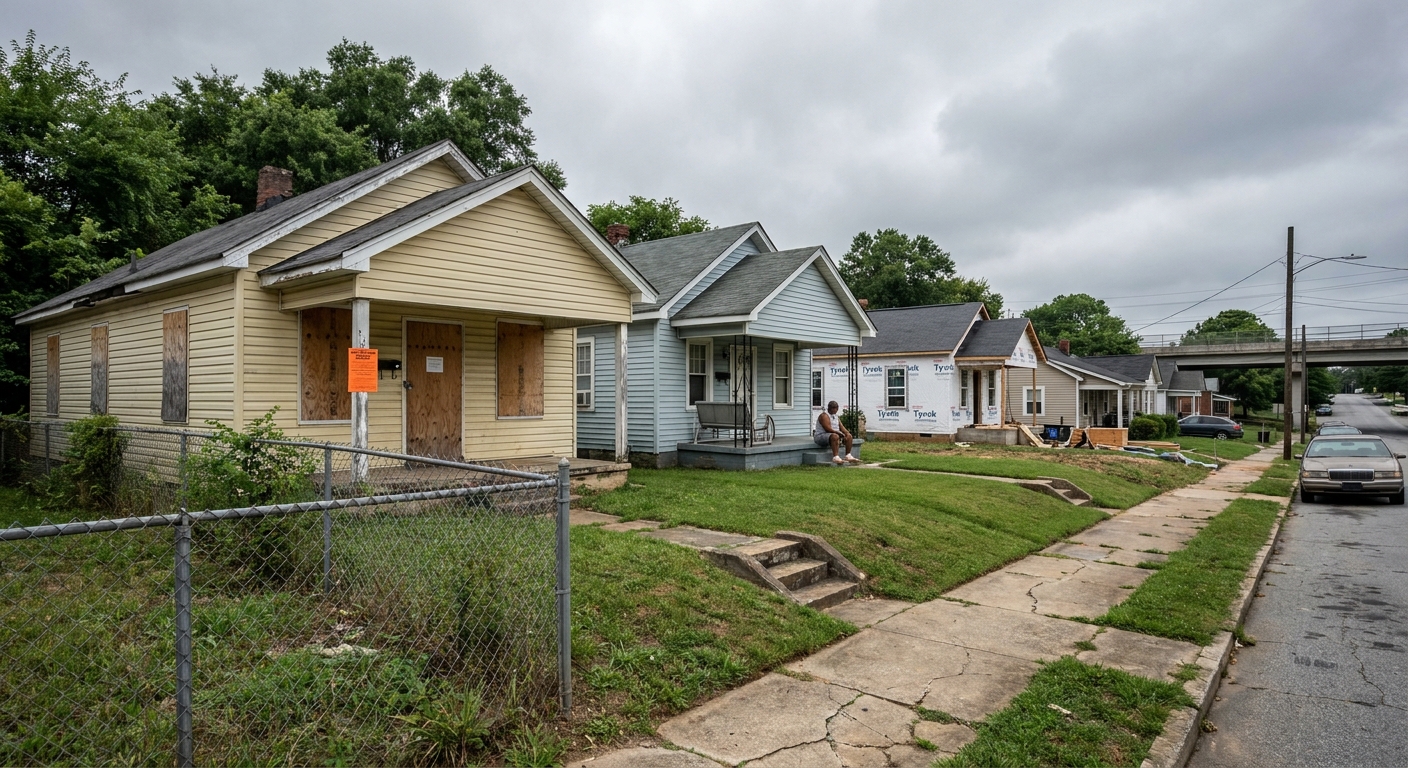
On Winston-Salem's east side, the test of a landmark federal housing law will be concrete: whether it helps turn lower-cost homes, vacant properties and aging public housing into stable places residents can afford to live. The 21st Century ROAD to Housing Act became law at 12:01 a.m. ET on July 11, after President Trump let the 10-day constitutional window expire without signing or vetoing it. The bipartisan, bicameral package combines the Senate's ROAD to Housing Act with the House's Housing for the 21st Century Act. It cleared the Senate 85–5 and the House 358–32, and is being described as the most consequential federal housing legislation in decades.
"For housing advocates and everyday families, the debate boils down to two critical questions: Does this bill actually reach those in the most desperate need, and will it deliver genuine, long-term housing stability?" said Sherri Lawson Clark, an associate professor of anthropology at Wake Forest University.
The law arrives as Winston-Salem confronts a stark east-west housing divide. Highway 52 and Business 40 serve as a physical and economic barrier separating the wealthy west side from the impoverished east side, where neighborhoods face severe affordability challenges driven by historical disinvestment, concentrated poverty and a lack of move-in-ready homes. A 2018 study identified a shortage of 16,244 affordable housing units in the city, with nearly half of renters considered cost-burdened and an additional 14,000 units needed by 2027 to meet projected demand. Forsyth County is projected to face a total shortfall of more than 25,000 affordable rental units by 2029.
Lawson Clark argues the law's true victory lies in its fine print: granular, structural protections for America's lowest-income households. "By fundamentally restructuring federal housing programs, the ROAD Act moves past generic incentives and implements surgical fixes specifically designed to protect vulnerable, low-income households," Lawson Clark said.
What the Law Does
The legislation allows communities to direct up to 20% of Community Development Block Grant funds toward affordable housing construction. It creates a $1 billion competitive innovation grant program — $200 million per year — for cities demonstrating measurable housing supply growth. It lifts the Rental Assistance Demonstration cap by 100,000 units, allowing public housing authorities to unlock private financing to rehabilitate aging properties.
The act eliminates redundant Section 8 inspections for units already vetted by other programs such as the Low-Income Housing Tax Credit, cutting administrative delays that cause tenants to lose available apartments. Its Whole-Home Repairs provision creates a five-year pilot program providing grants to low-income homeowners and forgivable loans to small landlords for repairs, with funding amounts left to future appropriations. It establishes an FHA pilot program and lender incentives for small-dollar mortgages under $100,000.
The legislation prohibits entities controlling 350 or more single-family homes from buying additional existing single-family homes, with penalties up to $1 million per violation. It raises the aggregate limit for community development bank public-welfare investments, including affordable housing, from 15% to 20%. And it uncouples federal rental assistance from maturing USDA mortgages, preventing an estimated 400,000 low-income rural families from losing subsidies or facing displacement.
East Winston's Crisis by the Numbers
The typical home value in East Winston fell by nearly 60% between 1996 and 2021, dropping from approximately $159,000 to $63,854 — a collapse linked to high volumes of predatory loans before 2008, resulting in massive foreclosures and concentrated poverty. As of mid-2026, the average home value has recovered modestly to a range of approximately $117,800 to $124,000 but remains well below the city's overall average of $224,780.
There are approximately 6,000 vacant properties in Winston-Salem, with the vast majority concentrated in the eastern and southeastern wards. Most affordable homes in East Winston, especially those under $100,000, require minor fixes or major structural rehabilitation that low-income buyers cannot afford. The area has one of the highest eviction rates in the country. According to 2022 data, white householders in Winston-Salem earned a median income of $71,100, compared with Black householders, who earned $40,698.
How the Law Maps onto Winston-Salem
Several provisions target conditions specific to East Winston. The small-dollar mortgage pilot program addresses a market where many homes are priced under $100,000 but traditional lenders have avoided financing in that range. The Whole-Home Repairs provision could bridge the gap between those prices and the cost of making homes habitable. The expanded CDBG flexibility could allow Winston-Salem to increase its annual commitment beyond the $500,000 it currently allocates to affordable housing projects.
The expanded RAD cap is directly relevant to the city's ongoing Choice Neighborhood Initiative, a federally funded revitalization project in East Winston that received a $30 million HUD grant in 2020. The project replaces 244 aging units at Cleveland Avenue Homes, built in the 1950s, with 406 new mixed-income units, with over $126 million in total development costs across six phases leveraging the federal grant with private equity, state tax credits and bank debt. The project has a mandatory expenditure deadline of Sept. 30, 2026, though construction of housing phases is expected to extend into 2027. A groundbreaking ceremony for the Legacy Heights project — Phases 2 and 3 — occurred on April 2, 2026, after HUD provided a supplemental $2.5 million grant in July 2024 to address a funding gap.
The city is also attempting to address housing gaps by selling vacant lots on the east side for $1 to build affordable homes — an initiative the ROAD Act's small-dollar mortgage pilots and home repair grants could make more viable by helping buyers finance and repair low-cost homes that conventional lenders currently avoid.
What Comes Next
The act's provisions require local match funding, administrative capacity and policy changes to access federal dollars — a structure that benefits communities already committed to housing equity but provides limited help to jurisdictions lacking the institutional infrastructure to deploy the tools. The competitive innovation grants reward cities that can document concrete progress, meaning Winston-Salem must show results on east-side revitalization to access the largest pools of federal support.
The city faces immediate decisions about whether to redirect a larger share of its CDBG allocation under the new 20% flexibility cap, whether to apply for competitive innovation grants, and whether to seek FHA participation in the small-dollar mortgage pilot. The legislation's passage shifts the question from whether federal policy supports local housing equity to whether Winston-Salem leaders will seize the tools now available to finally address the east-west divide that has defined the city for decades.