Obituaries
Eva Boston Howell, 96, Remembered After a Life Spanning Nearly a Century in Winston-Salem
By Staff · July 18, 2026
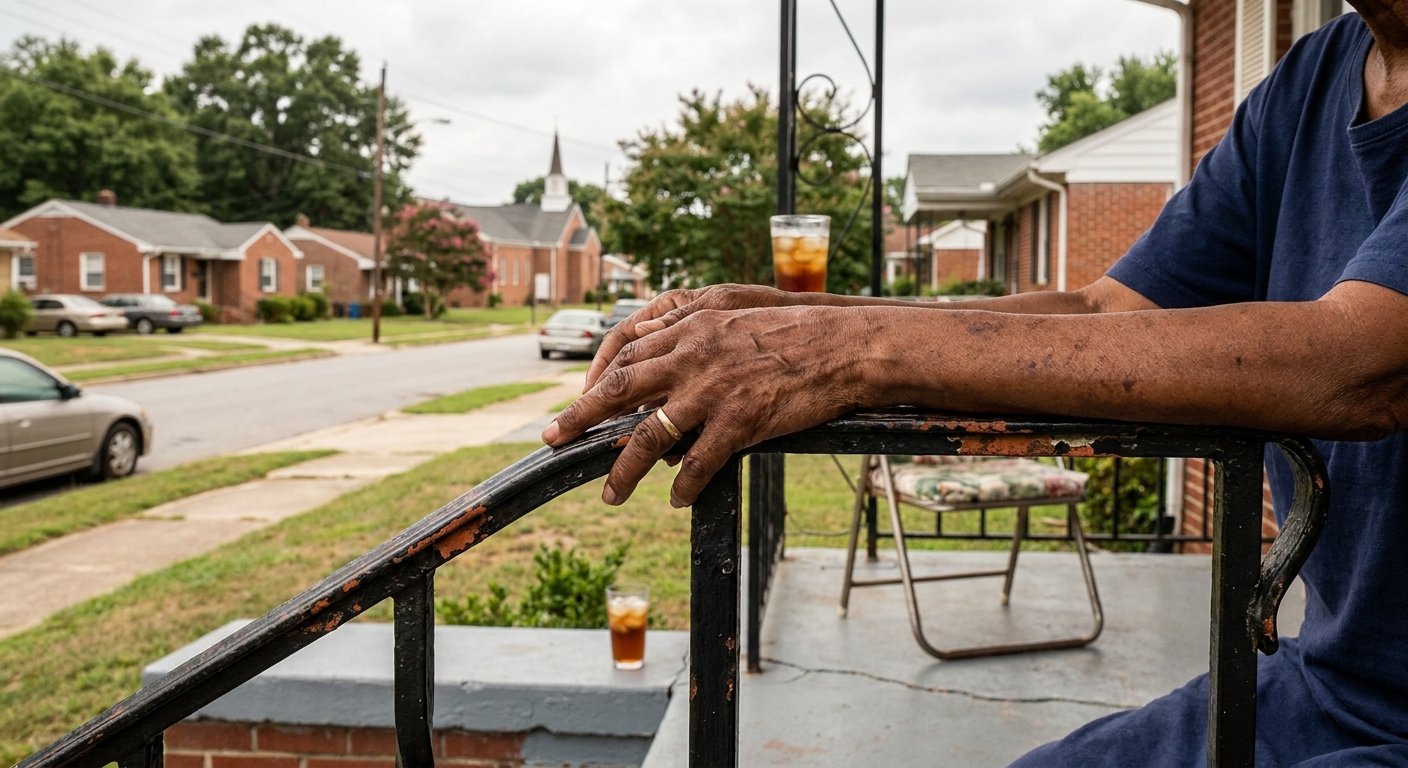
Eva Boston Howell came to Winston-Salem in 1951 and spent the next 75 years connected to the city. She died July 4, 2026, at age 96 at the Kate B. Reynolds Hospice Home.
Howell was born Jan. 22, 1930, in Vivian, West Virginia, to George and Frances Boston. Her life arc—from a West Virginia coal town to three-quarters of a century in Winston-Salem—coincided with the city's transformation from tobacco-economy hub through urban renewal, integration and downtown revival.
Vivian, in McDowell County, was a company-owned coal-mining community that experienced rapid growth by 1930, with its population quadrupling to 2,773 as mining activity expanded along the Norfolk & Western Railroad. The Peerless Coal & Coke Company, the most prominent operator active from 1898 into the 1950s, dominated the community and built key infrastructure, including a company store constructed in 1921.
When Howell arrived in 1951, the city's African American community was anchored in neighborhoods such as Columbia Heights and East Winston. That same year, Happy Hill Gardens opened as Winston-Salem's first public housing project specifically for African American residents, with 498 total units by 1952. And Winston-Salem Teachers College graduate Edward O. Diggs became the first Black student admitted to the UNC medical school.
Howell graduated from Winston-Salem Teachers College, now Winston-Salem State University, located in the Columbia Heights neighborhood immediately south of East Winston, approximately one to one-and-a-half miles from downtown. Renamed from Slater Academy in 1925, the college became the first Black institution in the nation authorized to grant bachelor's degrees in elementary education. It served as both an educational institution and a cultural center for the thriving Black community in Columbia Heights, training African American teachers for segregated schools in North Carolina. Teachers migrated to Winston-Salem and bought homes to create middle-class enclaves, and Howell's education positioned her within that cohort of African American educators who formed the backbone of the city's Black middle class during segregation. The college was renamed Winston-Salem State College in 1963 and achieved university status in 1969.
The East Winston General Neighborhood Renewal Plan in the 1960s displaced a large African American community, including areas near the college, demolishing culturally significant neighborhoods.
United Metropolitan Missionary Baptist Church, where Howell's funeral service was held, traces its roots to the late 1800s through the merger of two historic churches: West End Baptist Church and First Institutional Baptist Church. First Institutional Baptist Church was established on June 30, 1924, by Dr. Gholson after he resigned from First Baptist Church, Highland Avenue. Located at 450 Metropolitan Drive in the East Winston neighborhood, the church served as a lasting anchor for Howell's connection to the community across seven decades.
In 2014, United Metropolitan secured control of adjacent properties to launch the Metropolitan Village development project, an affordable housing initiative aimed at revitalizing the neighborhood. Ground was officially broken in 2022 on the development located on the corner of Highland Avenue and 5th Street, just east of the sanctuary—an effort to preserve community anchors amid the development pressures that have reshaped East Winston since the urban renewal displacements of the 1960s.
The Kate B. Reynolds Hospice Home, where Howell died, opened in 1998 to provide around-the-clock short-term inpatient and respite care, 19 years after the organization became North Carolina's first hospice provider in 1979. The home is named in honor of Kate Bitting Reynolds, whose charitable trust, established in 1947, has long supported healthcare and low-income residents in Forsyth County and North Carolina.
Howell is survived by her children Brenda Daniels, Sharon Howell, and Derrick Boston; her sister Cleta Wilson; and many nieces, nephews, cousins, and friends. She was preceded in death by her parents and siblings Floyd, Jerry, Clarence Boston, and Pauline Washington.
A viewing was held Monday, July 13, 2026, at Russell Funeral Home in Winston-Salem, which handled the arrangements. A visitation and funeral service followed Tuesday, July 14, at United Metropolitan Missionary Baptist Church. The service brought together family, friends, and community members who recognized Howell as part of the generation that built the institutions—churches, schools, and civic networks—that sustained East Winston through displacement, integration, and economic transformation.