Public Safety & Courts
Grand Jury Indicts Lexington Woman for First-Degree Murder in April Killing
By Staff · July 18, 2026
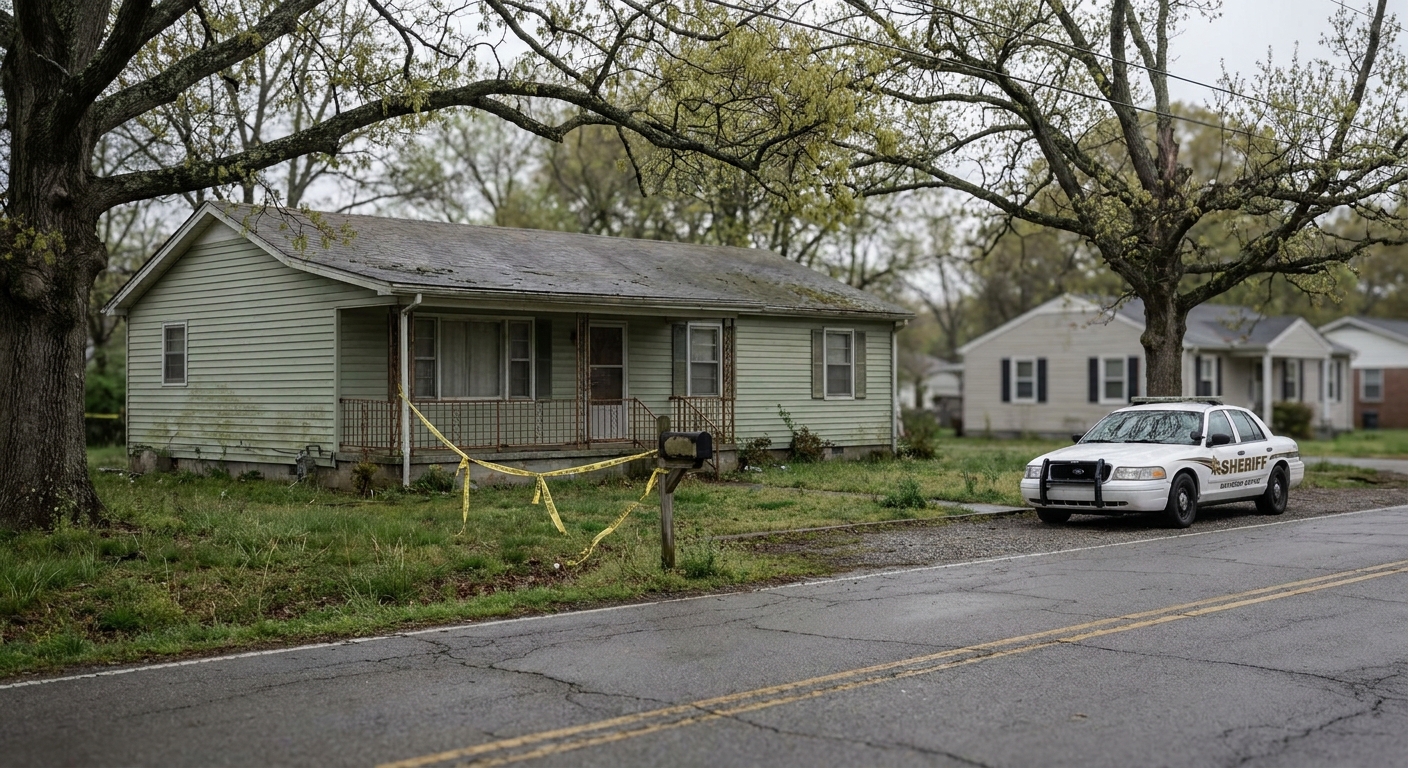
Nearly three months after Michael Steven Allen was found fatally stabbed at a Lexington home, a Davidson County grand jury has formally charged his daughter, 20-year-old Maleigha Loale Allen of Lexington, with first-degree murder in the April 2026 death of her father. Detectives with the Davidson County Sheriff's Office Criminal Investigations Division appeared before the grand jury on July 6, 2026. Davidson County is located directly south of Forsyth County, with Lexington—the county seat—approximately 20 miles south of Winston-Salem.
On April 17, 2026, deputies and detectives responded to the area of Whispering Oak Drive in Lexington at approximately 7:20 a.m. after receiving a report of a female suffering from multiple stab wounds. That female was Maleigha Loale Allen, who was transported to a hospital with non-life-threatening injuries. During the subsequent investigation, deputies conducted a welfare check at 556 Bryant Road in Lexington and discovered 44-year-old Michael Steven Allen deceased from multiple stab wounds. An autopsy conducted on April 20, 2026, ruled his death a homicide caused by sharp force trauma. Investigators concluded the killing was premeditated. The Davidson County Sheriff's Office stated the incident was believed to be isolated.
Maleigha Loale Allen was initially arrested on April 21, 2026, after being released from the hospital and was charged with first-degree murder and held without bond. Following the grand jury's true bill, Allen was formally arrested on the indictment on July 7, 2026, at the Davidson County Jail. She again received no bond and was scheduled to appear in Davidson County Superior Court on July 8, 2026.
North Carolina does not impose a fixed statutory deadline for a grand jury to issue a first-degree murder indictment; the District Attorney decides when to present the case, and the process can range from hours to several months depending on the complexity of the investigation. First-degree murder cases often involve extensive forensic analysis, witness interviews, and digital evidence. Grand juries in North Carolina are convened by the superior court, often at the start of criminal court sessions after January 1 and July 1.
A grand jury serves as the gatekeeper for felony cases by determining whether probable cause exists to believe a defendant committed a crime. If at least 12 of the 18 members concur, they return a true bill of indictment, formally charging the defendant. Proceedings are secret: the defendant has no right to be present, testify, or present witnesses, and no transcript is created. The probable cause standard is described as a reasonable suspicion supported by circumstances sufficiently strong to warrant a cautious person to believe the accused is guilty—far lower than the standard required for conviction at trial. A grand jury does not determine guilt or innocence; its sole function is to decide whether the case should proceed to trial in Superior Court.
After indictment, first-degree murder cases move to superior court, where the process includes plea negotiations, pretrial motion hearings, and, if no plea is reached, a trial that may be scheduled one to two years after the initial charges. Arraignment is not mandatory unless the defendant files a written request within 21 days of the indictment's service; otherwise, the court automatically enters a not guilty plea. A defendant charged with first-degree murder has no automatic right to bond, as first-degree murder is a capital offense where pretrial release is discretionary rather than guaranteed.