Public Safety & Courts
High Point Man Sentenced to Over 16 Years After 'Death by Distribution' Conviction in Davidson County
By Staff · July 18, 2026
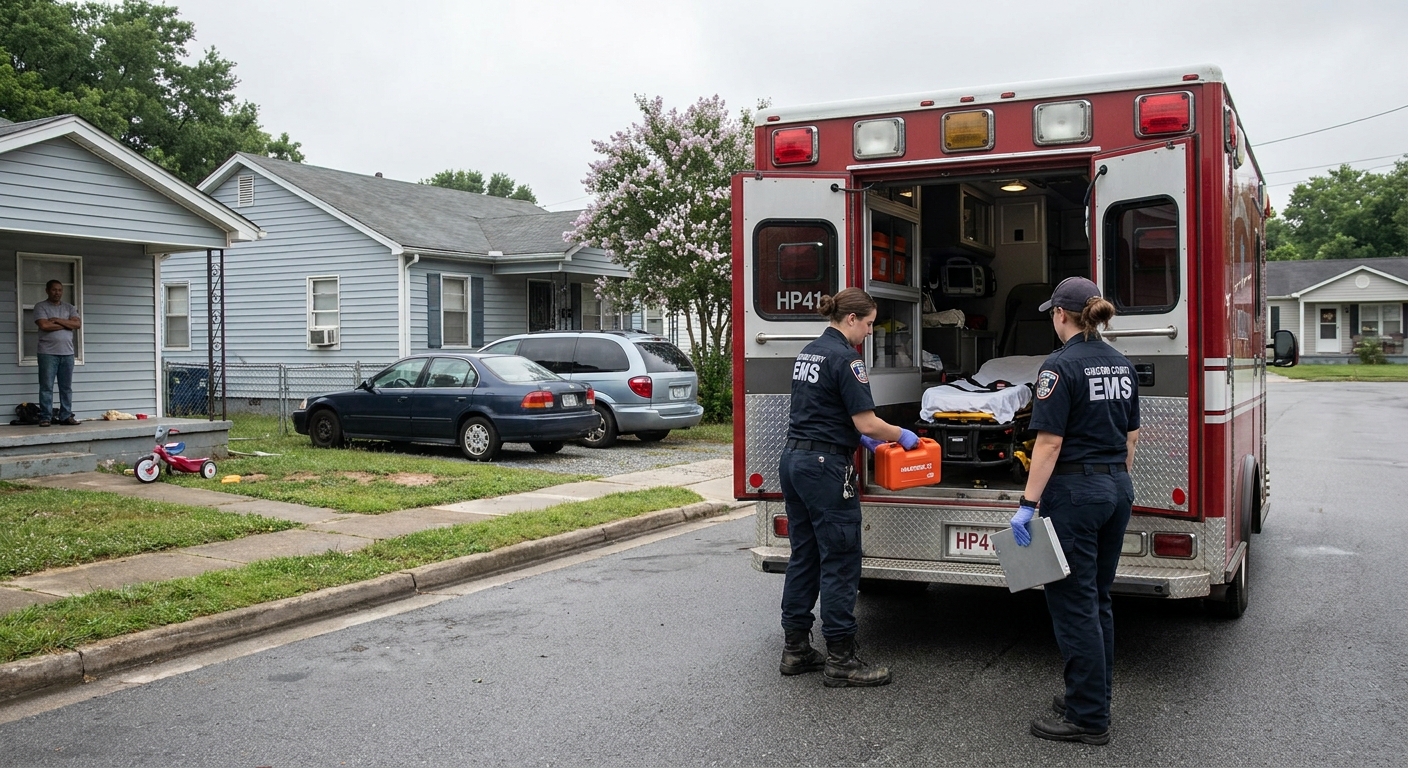
High Point resident Donta Octovius Williams faces at least 16 years in state prison after a Davidson County jury convicted him of death by distribution and involuntary manslaughter in a fatal fentanyl-overdose case following a week-long trial. Williams, 37, was sentenced to 199 to 260 months in the North Carolina Department of Adult Correction.
Katharine Ellen, 31, died of fentanyl toxicity in June 2024 at a High Point home in Davidson County. Her seven-month-old daughter later died of dehydration after Ellen became incapacitated, leaving the child unattended; investigators determined no other adult was present. Prosecutors established that Williams unlawfully sold fentanyl to Ellen and that the sale was the proximate cause of her death.
Under North Carolina's death-by-distribution statute, G.S. 14-18.4, prosecutors must show that an unlawful drug action was the proximate cause of a user's death after ingestion. In a sale-based case, the state must prove the defendant sold a specified controlled substance; the user ingested it and died as a result; the sale was the proximate cause of death; and the defendant acted without malice. Death by distribution through delivery is a Class C felony; through sale, the more serious Class B2 felony. Delivery with malice is an aggravated Class B2 felony.
Williams' sentence comes as prosecutors across North Carolina continue bringing death-by-distribution cases. Davidson County is part of Prosecutorial District 33, which also includes Davie County and is led by District Attorney Garry Frank. Frank has said he will not seek re-election in 2026, making a new district attorney likely to take office at the start of 2027. In Orange County, a man charged in the fatal overdose of a Carrboro resident went to trial in June 2026, one of seven death-by-distribution cases brought there since the statute took effect in 2019. In Rutherford County, Kathryn Diane Morrison was indicted on second-degree murder and death-by-distribution charges after an overdose death investigation. An estimated 2,731 North Carolinians died from overdoses in 2025.
The law gives prosecutors a tool to pursue those who supply fentanyl. The harder public-safety question is whether lengthy prison terms stop the next overdose. North Carolina saw overdose deaths fall 34% between 2023 and 2024, its first annual decline since 2019. Analyses, including work by The Pew Charitable Trusts, found no relationship between drug-offense incarceration rates and overdose death rates. Research consistently shows that increased arrests and harsher penalties do not reduce drug use, sales, or fatal overdoses; when one low-level dealer is incarcerated, another quickly replaces them to meet demand.
The people prosecuted in these cases are not always major distributors. A 2021 national study found that 50% of drug-induced homicide prosecutions involved friends, relatives, or romantic partners of the person who died, while 47% involved people who rarely sold drugs or sold only small amounts. Studies have also found substantial racial disparities in such prosecutions. And when witnesses fear criminal exposure, these cases can discourage calls for emergency help under Good Samaritan laws, increasing overdose risk. The medical community, advocacy organizations, and legal scholars uniformly conclude that drug-induced homicide laws fail to mitigate overdose risk and instead induce harm, with no empirical evidence that these prosecutions save lives.
Treatment and prevention remain the other side of the equation. Medication-assisted treatment with methadone and buprenorphine/Suboxone is scientifically proven to mitigate health risks associated with opioid dependence and serves as a gateway to broader drug treatment programs. In Forsyth County, officials funded a medication-assisted treatment program for opioid use disorder from July 1, 2025, through June 30, 2026, including staffing, medications, and housing support. Novant Health Behavioral Health Center in Winston-Salem offers around-the-clock outpatient assessments for medication-assisted treatment with methadone, buprenorphine, and naltrexone, aiming to provide immediate access without wait times. Take-home naloxone doses decrease opioid overdose deaths, and research confirms naloxone does not increase opioid use prevalence or frequency. Syringe service programs reduce HIV and hepatitis C transmission by approximately 50% and are linked to a 66% reduction in needle-stick injuries to law enforcement. North Carolina currently has no operational safe consumption sites, as the state lacks legal authorization for such facilities. Research on safe consumption sites in other jurisdictions shows they reduce overdose, HIV, and hepatitis C, as well as public injection and discarded syringes, and are cost-effective compared to other interventions.
For Winston-Salem and the Triad, the public-safety test left after the prosecution is whether a response centered on punishment is being matched by the treatment, housing, health care, and harm-reduction access capable of preventing the next fatal overdose.