Public Safety & Courts
Proposed Domestic Violence Offender Registry Could Reshape Public Safety in the Twin City
By Staff · July 18, 2026
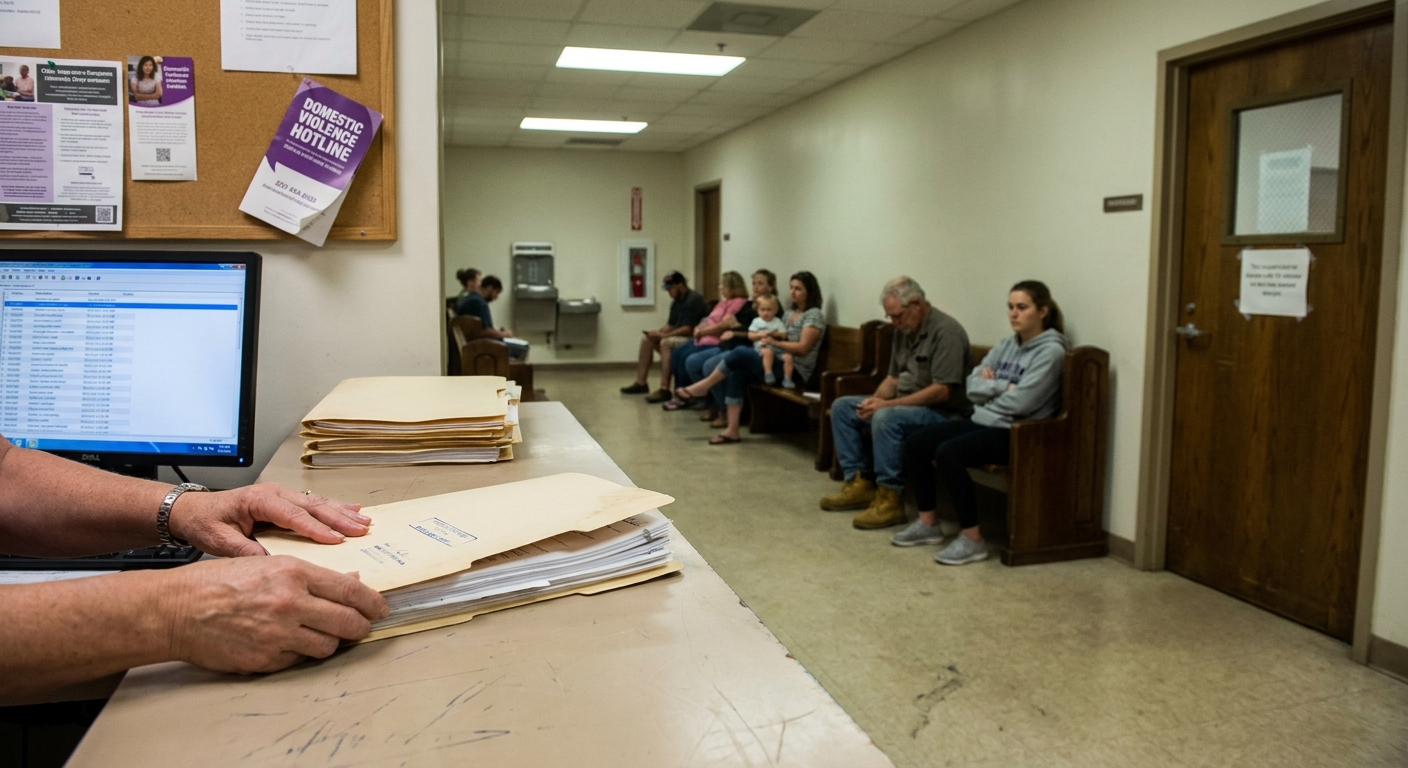
For a Forsyth County officer responding to a domestic violence call, a judge weighing bond or a survivor trying to assess an abuser's history, a statewide registry could make repeat convictions easier to see. North Carolina State Sen. Woodson Bradley's proposal would pair public tracking of repeat domestic violence offenders with possible electronic monitoring — a potentially consequential change in a county where Winston-Salem Police recorded 4,284 domestic violence incidents in fiscal year 2023-2024 and the Forsyth County Sheriff's Office flagged 2,500 offenses specifically as domestic violence in calendar year 2024. The proposed registry, modeled on Tennessee's first-in-the-nation system that launched in January 2026, would be publicly accessible online and is expected to be introduced when the legislative session begins in fall 2026. National domestic violence policy experts have raised questions about whether public registries genuinely improve victim safety or introduce unintended harms, including exposure risks for survivors and false confidence in incomplete data.
Tennessee's Persistent Domestic Violence Offender Registry, named for deputy Savanna Puckett, who was killed by a partner with a domestic violence history, lists individuals convicted of domestic violence at least twice and is maintained by the Tennessee Bureau of Investigation as a publicly accessible online database. The registry publicly displays registrants' names, dates of birth, dates of conviction, counties of conviction and current photographs, but does not disclose home addresses, Social Security numbers or driver's license numbers. Registration periods range from 2 to 20 years depending on the number of qualifying convictions, and offenders must pay a $150 registration fee split between the county clerk and the state bureau of investigation. County court clerks must send certified copies of judgments to the Tennessee Bureau of Investigation within 7 days of conviction. The registry was designed with a primary goal of prevention rather than punishment, aiming to make abuse patterns visible to law enforcement and the public before another tragedy occurs.
Bradley, who represents District 42 in Mecklenburg County and is a domestic violence survivor, said, "An abusive person rarely gets caught the first time." Bradley, who represents District 42 in Mecklenburg County, said, "After a certain amount of offenses, you get put on it and you're electronically monitored because it's obvious you are an individual offender, that you have issues, and that you're more likely to commit these crimes again." A July 9, 2026, domestic violence murder in Pineville, in which Jehaaz-Akil Khaliq Echoles allegedly fatally stabbed his 5-year-old son, prompted Bradley to renew her push for the registry; Echoles had one domestic violence conviction, multiple prior assault charges and two pending cases for the same charge. Bradley had previously sponsored Senate Bill 626, a domestic violence offender registry bill that is now dead, and is working on new draft legislation for introduction in fall 2026. The proposal aims to alert first responders, courts and police to escalated threats by tracking individuals with a history of domestic violence, using Tennessee's model to help judges set bond and identify under-reported past offenses.
A separate domestic violence registry bill, HB 1075, was filed by Republican Representatives Reece Pyrtle Jr., Charles Miller, Heather Rhyne and Celeste C. Cairns on April 28, 2026. HB 1075 would create a registry for individuals convicted of a second domestic violence offense, maintained by the State Bureau of Investigation and electronically available for public inquiry. Registration periods under HB 1075 would be 2 years for one prior domestic violence offense, 5 years for two prior offenses and 10 years for three or more prior offenses. The bill remains in committee as of mid-July 2026.
Forsyth County had 6 domestic violence homicide victims in calendar year 2024, down from 10 victims in 2023. Winston-Salem Police reported 8 domestic violence-related homicides in fiscal year 2023-2024. The Forsyth County District Attorney's Office closed 1,834 domestic violence criminal cases in fiscal year 2023-2024, representing prosecutions that reached disposition rather than total reported incidents. Forsyth County courts received 1,123 Emergency Ex Parte Protective Order complaints in fiscal year 2023-2024. Family Services Inc., which operates the only domestic violence shelter in Winston-Salem, serves approximately 150 victims per year and provides about 8,601 nights of care annually for adults and children.
If North Carolina adopts Tennessee's model, Forsyth County court clerks would need to transmit certified copies of qualifying convictions to the State Bureau of Investigation within days, maintain current photographs and conviction records in a public database, and potentially support electronic monitoring of habitual offenders. The Forsyth County Sheriff's Office, Winston-Salem Police and Forsyth County court officials have not publicly commented on what operational changes, staffing needs or costs local implementation would require.
Tennessee is currently the only state with a domestic violence offender registry law, and there is no data yet demonstrating whether such registries improve offender accountability or reduce recidivism. The Ohio Domestic Violence Network, in testimony to the Ohio legislature on a similar proposal, warned that domestic violence registries only capture a fraction of abusers because many incidents go unreported or do not result in conviction. The Ohio Domestic Violence Network testified that registries risk listing criminalized survivors, including those subject to dual arrests where both partners are charged. National advocates warned that registries may deter reporting in rural and marginalized communities due to fear of public exposure.
Key questions for Forsyth County stakeholders include whether the registry would provide tools local law enforcement currently lacks, how much implementation would cost county agencies that closed more than 1,800 domestic violence prosecutions in a single fiscal year, and whether survivors would gain meaningful protection or face new risks from public disclosure of offender information. Family Services Inc. launched a $10.8 million capital campaign in October 2025 to build a new domestic violence shelter that will double current capacity and include the region's first on-site pet shelter. Family Services Inc. operates a 24-hour domestic violence crisis line at (336) 723-8125 and is located at 1200 S. Broad St., Winston-Salem.