Schools & Education
WSSU Lands Nearly $45 Million in State Budget — What It Means for Campus, Scholarships, and Winston-Salem's Nursing Workforce
By Staff · July 18, 2026
Nearly $45 million in the 2026 state budget is headed to Winston-Salem State University, with about $40 million earmarked for campus construction and the rest supporting scholarships, nursing workforce development and employee compensation. For a university that trains nurses, teachers and other professionals for the Piedmont Triad, the allocation carries consequences well beyond its campus.
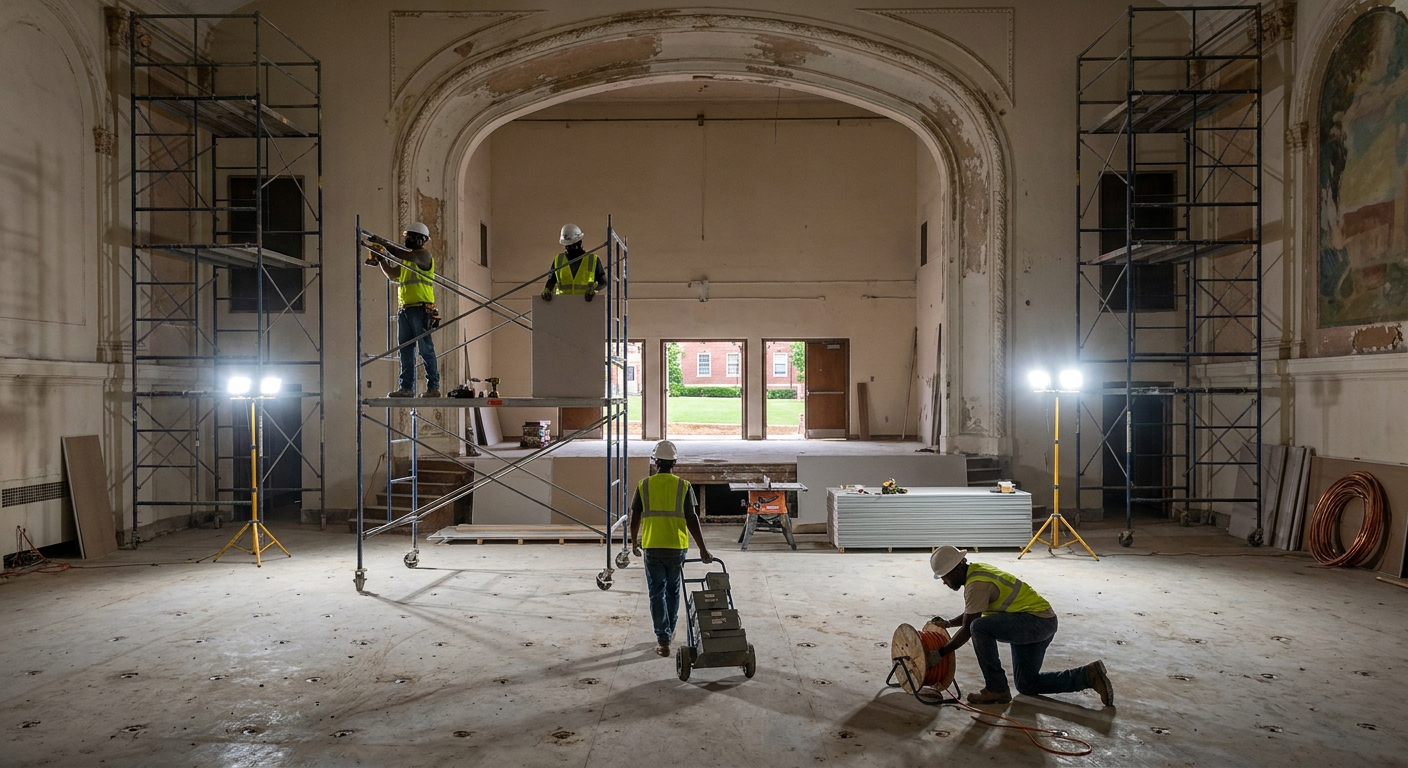
The funding could help more WSSU students afford a degree, create a path for nursing graduates to remain in North Carolina and improve the facilities and employee pay needed to sustain those programs. It also could restore K.R. Williams Auditorium, a longtime university and community venue, after years of modernization work.
But the package also revives a question that has followed the historically underfunded HBCU for years: whether the state is making a durable commitment to WSSU as a Winston-Salem workforce engine, or taking a substantial but still incomplete step toward parity.
Gov. Josh Stein signed the approximately $34.4 billion state budget into law July 7, 2026, ending a budget stalemate that had lasted more than a year. The allocation to WSSU ranks among the largest state investments in the university's history.
"This budget represents more than an investment in Winston-Salem State University; it is an investment in North Carolina's future," Chancellor Bonita J. Brown said.
"These strategic investments expand opportunity for our students, strengthen our ability to prepare the workforce our state needs, support the outstanding employees who make our mission possible and position WSSU to build on the momentum of our 'We Are Rising' strategic plan," Chancellor Bonita J. Brown said.
WSSU describes itself as a $600 million to $650 million annual economic engine, with graduates entering fields including nursing, bio-manufacturing and teaching. More than 9,000 of its alumni remain in the Piedmont Triad.
A nursing pipeline tied to North Carolina jobs
The most direct workforce component is WSSU's participation in the Nursing Fellows Forgivable Education Loan Pilot Program, a statewide effort designed to respond to healthcare workforce shortages. The 2026 budget authorized the program and set aside $4.3 million in nonrecurring statewide funding for Western Piedmont Community College, Wayne Community College and WSSU.
WSSU will also receive $100,000 in recurring funding for Nursing Fellows mentoring, coaching and curriculum support.
Students pursuing a Bachelor of Science in Nursing or Master of Science in Nursing Education may receive forgivable loans of up to $5,000 per semester or $2,500 for a summer session. To qualify, applicants must be legal North Carolina residents. Graduating high school students must hold at least a 3.00 GPA, while undergraduate applicants need at least a 2.80 GPA.
Recipients must work in North Carolina as registered nurses or nurse instructors after they finish their studies. One-third of the loan balance and accrued interest is forgiven for every year of qualifying employment, with full forgiveness after three years.
More full-cost scholarships
The budget also expands the Cheatham-White Scholarship Program at WSSU. Beginning in the 2027-28 academic year, the university may award up to 50 merit-based scholarships each year.
The scholarship covers the full direct cost of attendance: tuition, fees, housing, meals, textbooks, a laptop, supplies, travel and personal expenses. It also includes four summers of funded enrichment and networking opportunities.
The program was first established for North Carolina A&T State University and North Carolina Central University. Legislation extended it to WSSU effective July 1, 2019.
WSSU is ranked North Carolina's top HBCU for value, the state's top university for social mobility and North Carolina's only opportunity college. For students whose ability to enroll depends on housing, food, books and transportation as much as tuition, the additional scholarships could broaden access in a meaningful way.
Pay raises and a long-running compensation gap
The budget directs money toward the people who keep WSSU's classrooms, offices and student services running. Eligible staff will receive a 3% raise, one-time bonuses and additional compensation for campus law enforcement.
WSSU had already announced a 7% employee compensation increase across two years in November 2023: a 4% increase in 2023-24 and a 3% increase in 2024-25, identifying faculty and staff retention as the goal.
The latest raises and bonuses offer some relief, but they come after a documented pay gap. In 2023, WSSU's average faculty salary was $74,823 and its average non-teaching staff salary was $54,958. Both were below national averages, and the university's overall average employee salary was 10% below peer institutions that year.
Most of the money goes to campus work
The largest share of the package is tied to WSSU's physical campus. The capital allocation includes about $40 million over two fiscal years to complete renovations to K.R. Williams Auditorium and modernize Eller Hall and Pegram Hall.
The nearly $45 million figure combines WSSU-specific capital appropriations with the university's portions of statewide programs, including nursing initiatives, UNC System employee raises and expanded merit scholarships. WSSU has not broken out its precise share of each statewide funding pool.
At K.R. Williams Auditorium, the budget releases the remaining $14.65 million needed to finish a three-year, $57 million modernization project. The 49,000-square-foot, 1,655-seat auditorium has been offline during construction. The project includes a 45,000-square-foot, three-story expansion.
The building is named for WSSU's fifth chancellor, Kenneth R. Williams, who served for more than 35 years before retiring in 1977. The auditorium has hosted the National Black Theatre Festival and Broadway productions. Its reopening would restore not only a university venue but also a major community gathering space.
A significant investment, but against a larger history
The scale of the new appropriation is inseparable from WSSU's longstanding resource challenges. The university's endowment stood at $114.5 million in 2025, below the $200 million baseline experts cite for an HBCU to be considered financially healthy.
Nationally, 97% of HBCUs are considered financially unhealthy, while predominantly white institutions generally have stronger endowments. WSSU lost North Carolina's land-grant designation competition to North Carolina A&T State University in 1891-92, limiting the federal funding and resources available to it compared with land-grant peers.
Private philanthropy has helped strengthen the university's position. MacKenzie Scott gave WSSU an unrestricted $50 million gift in 2025, bringing her total contributions to $80 million after an earlier $30 million gift in 2020.
Still, state operating support, employee pay, scholarships and capital construction shape what the university can sustain year after year.
What it means for Winston-Salem
"At WSSU, we believe higher education should transform lives while strengthening communities," Chancellor Bonita J. Brown said. "This investment allows us to accelerate that work and deepen our impact across North Carolina," Chancellor Bonita J. Brown said.
The test of this allocation will not be its headline number but what Winston-Salem sees from it: students able to stay enrolled, nurses who remain in North Carolina, employees who can be retained and a campus better equipped to serve the region. Whether it marks sustained state support equal to the university's role in the Twin City will be measured in the years after the money is spent.